10 / 06 / 2026
🎙️ Where Does Your Food Come From? A Partner Podcast from Porto
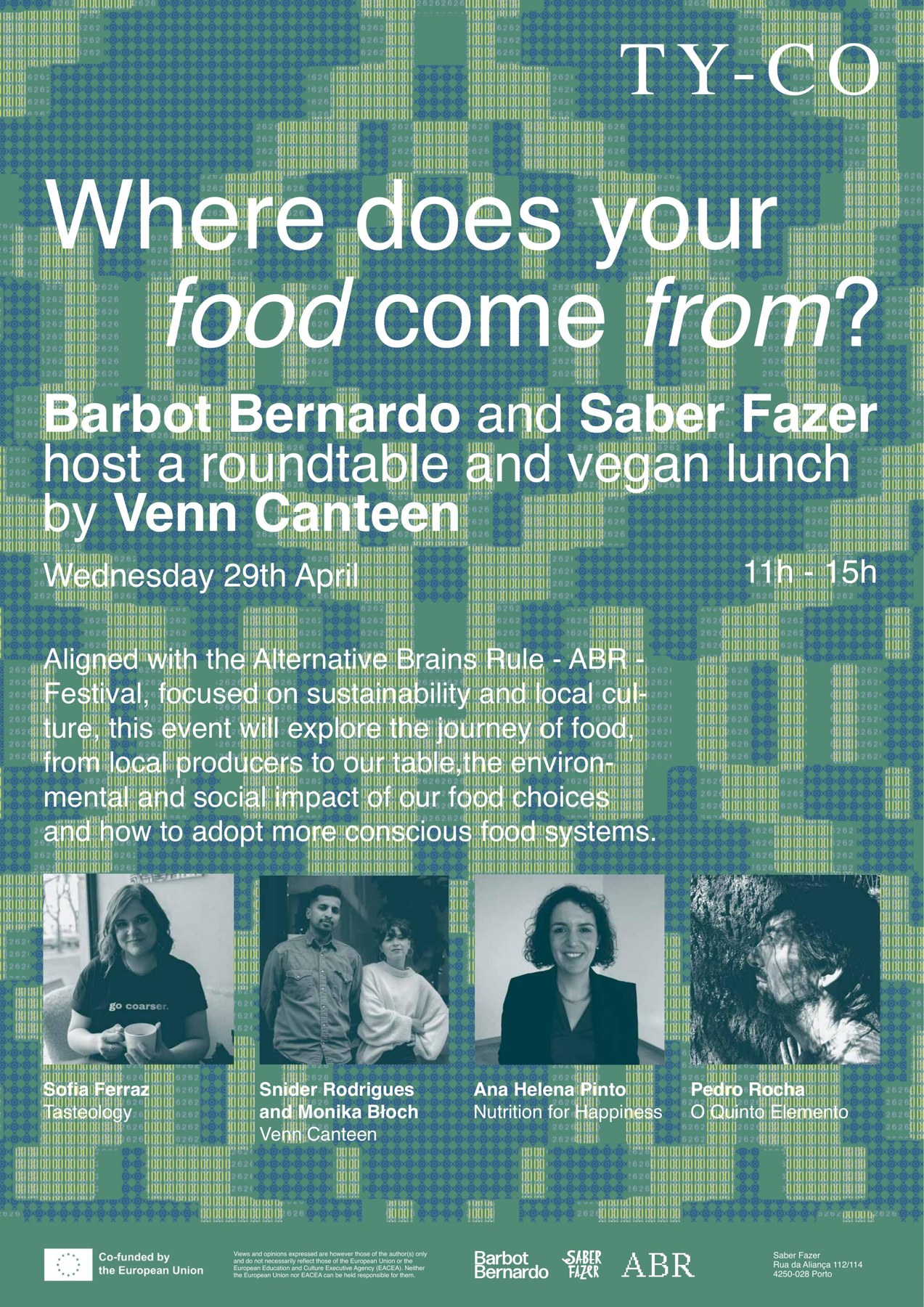
A TY-CO roundtable and vegan lunch hosted by Barbot Bernardo and Saber Fazer in Porto, 29 April 2026
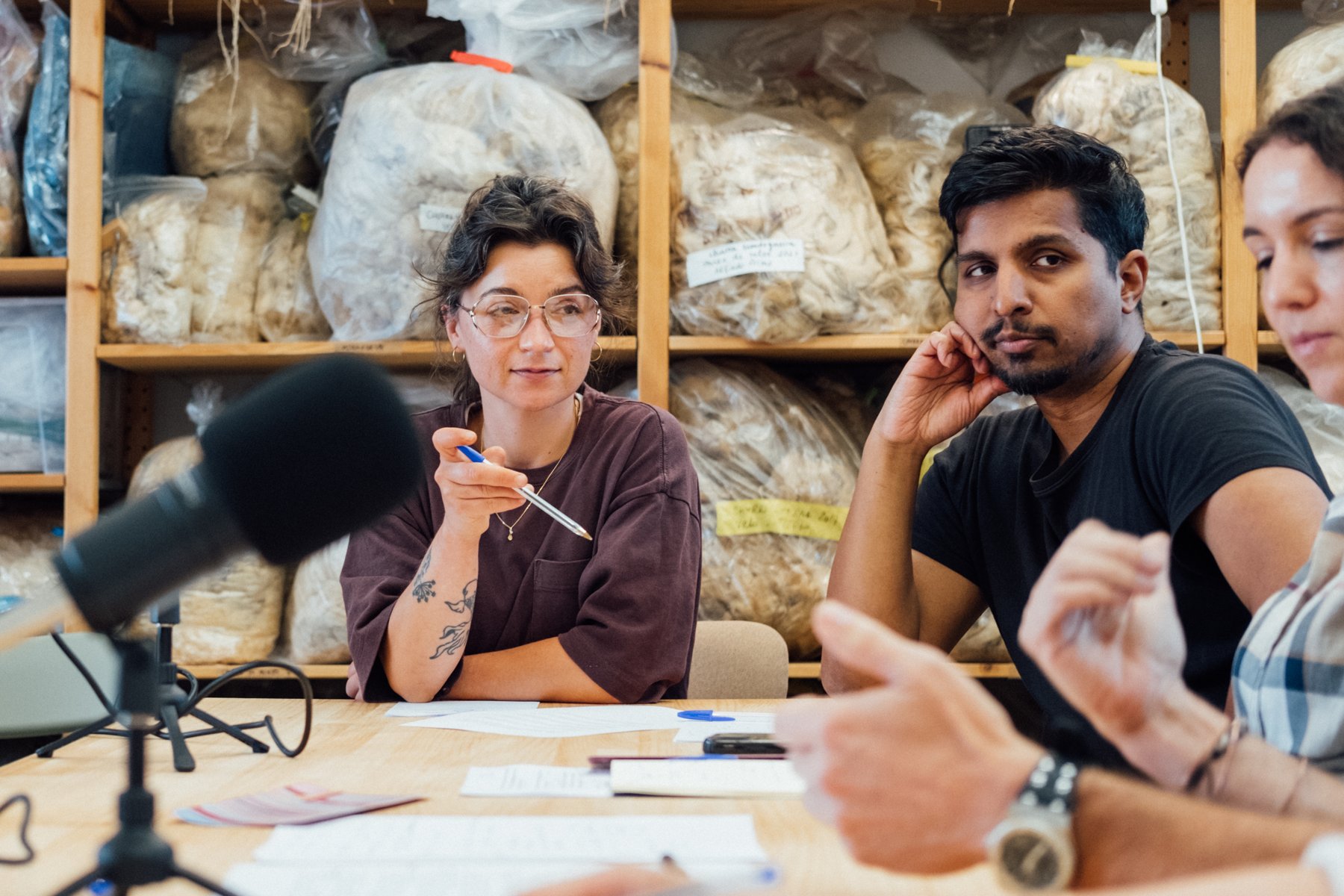
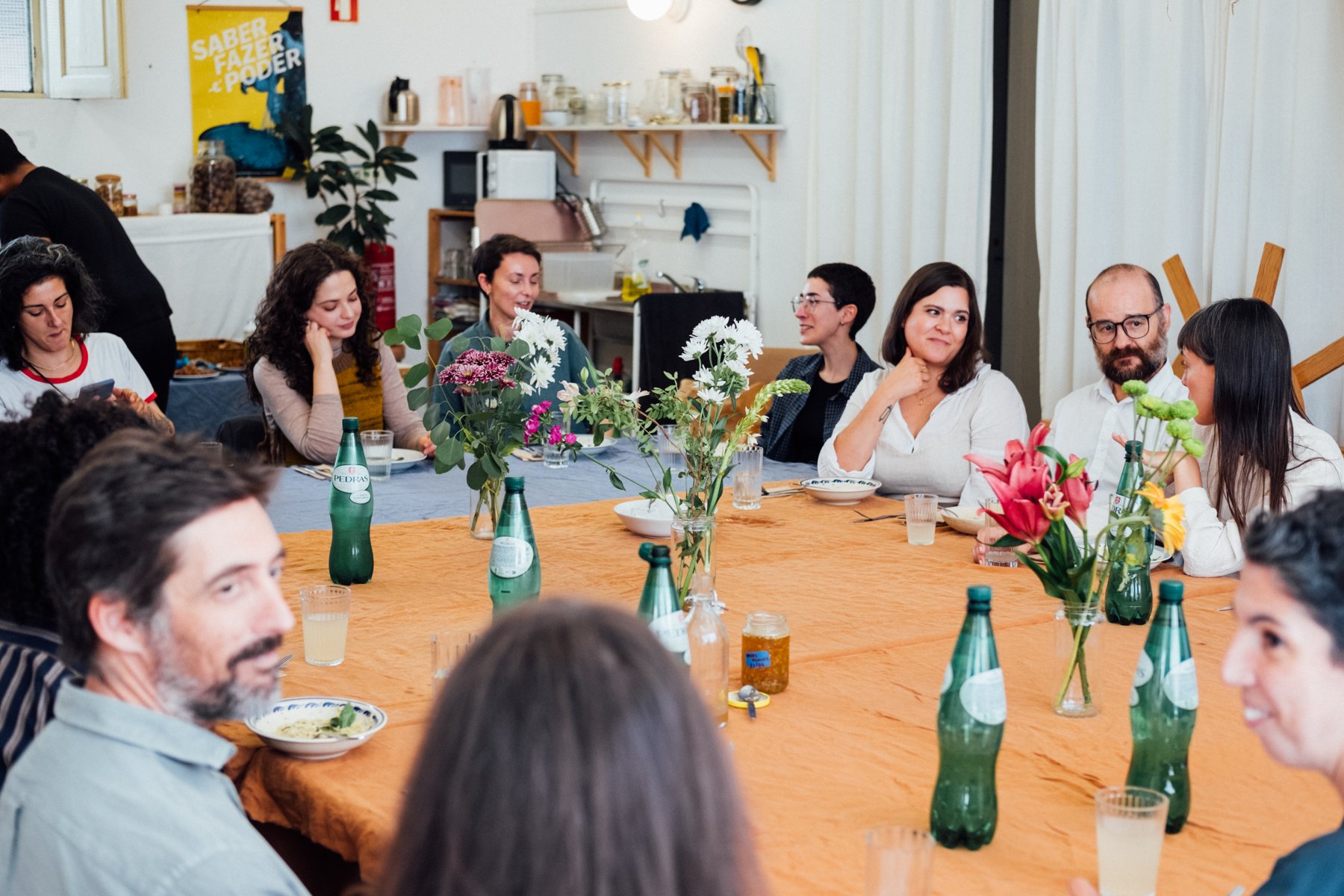
As part of TY-CO (Typologies of Community), our partner Barbot Bernardo brought its community together at Saber Fazer in Porto for an afternoon on food politics, agroecology and education. In line with ABR Festival's focus on sustainability and local culture, it followed food from local producers to the table and asked a simple, uncomfortable question: what do our food choices really cost?
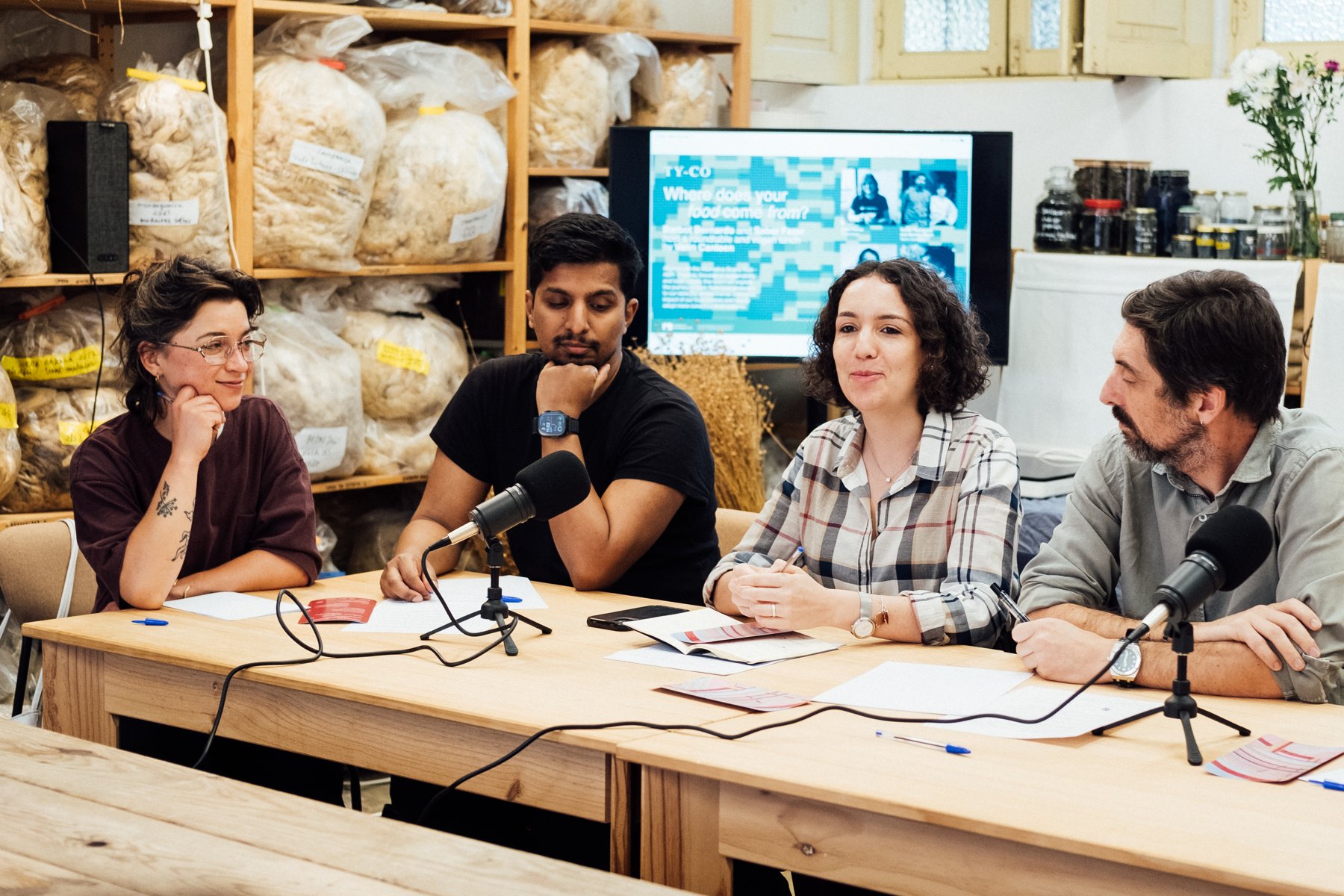
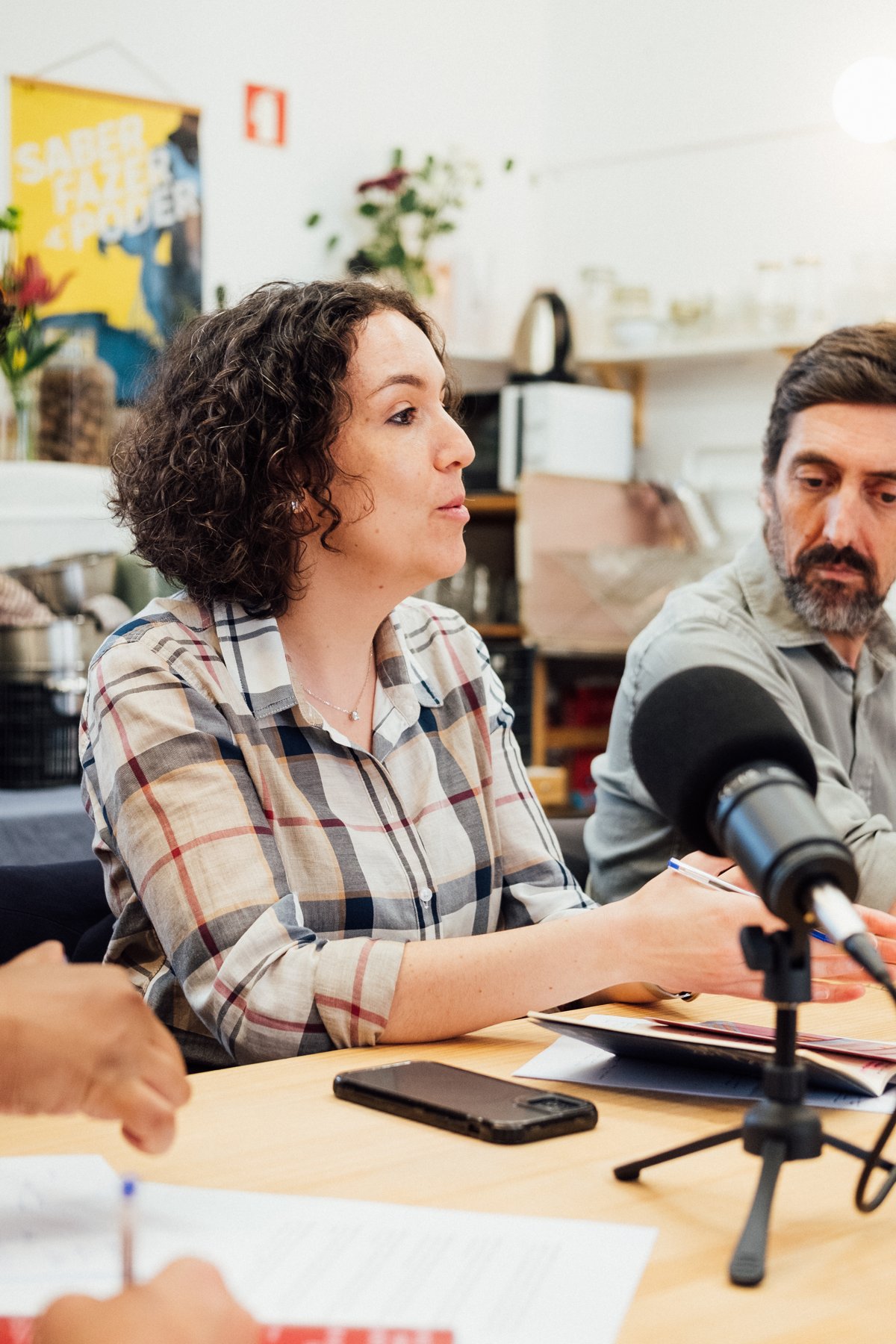
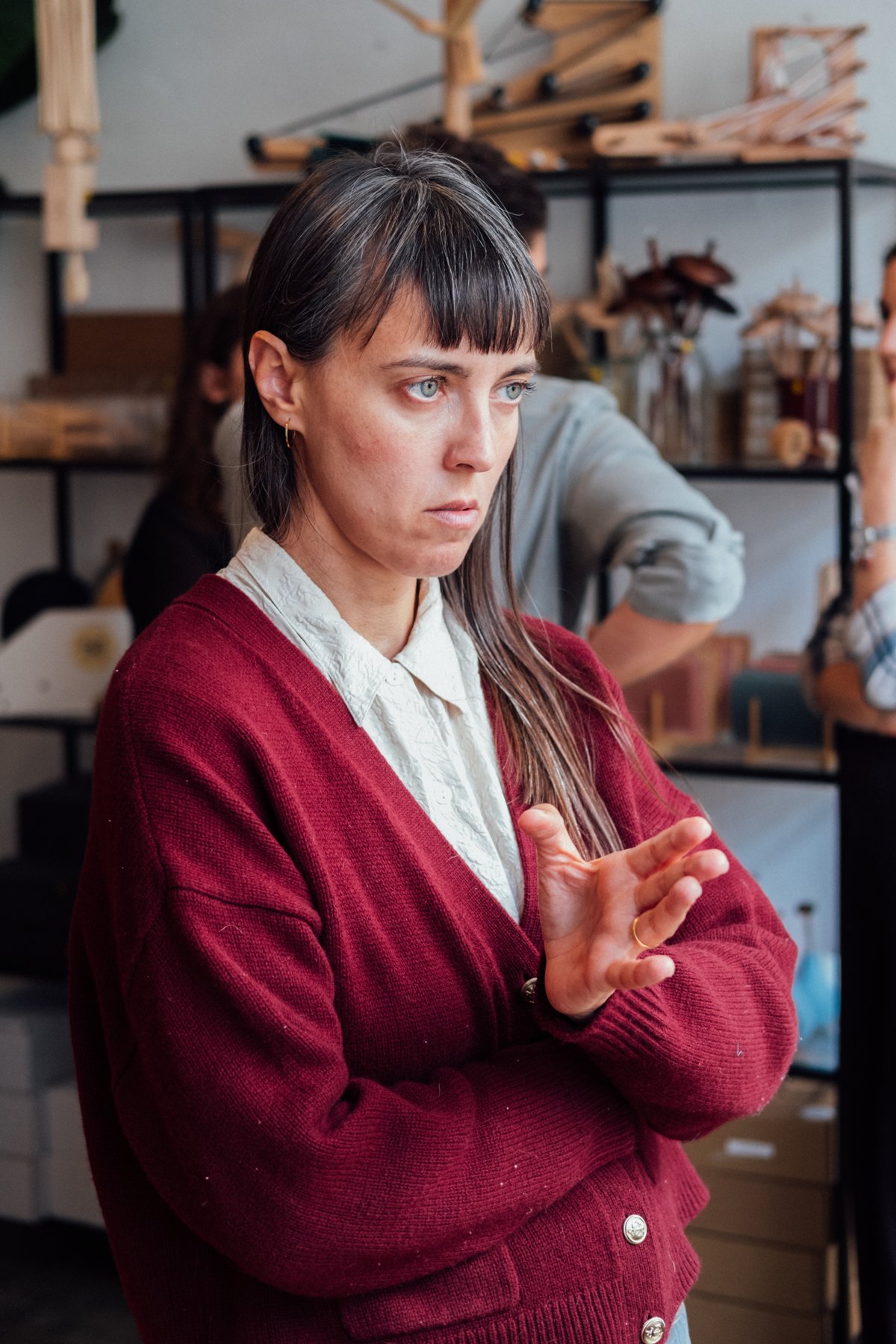
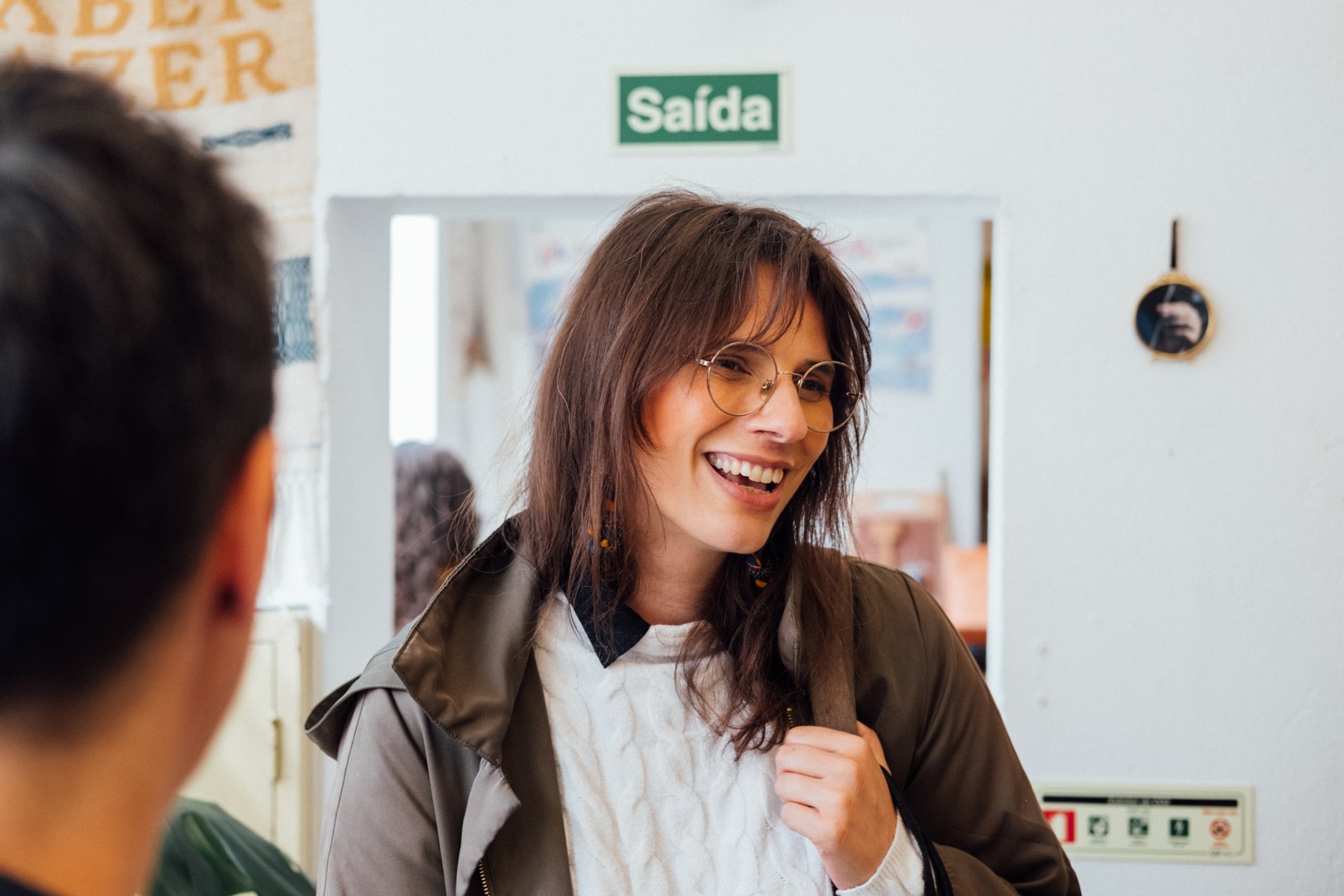
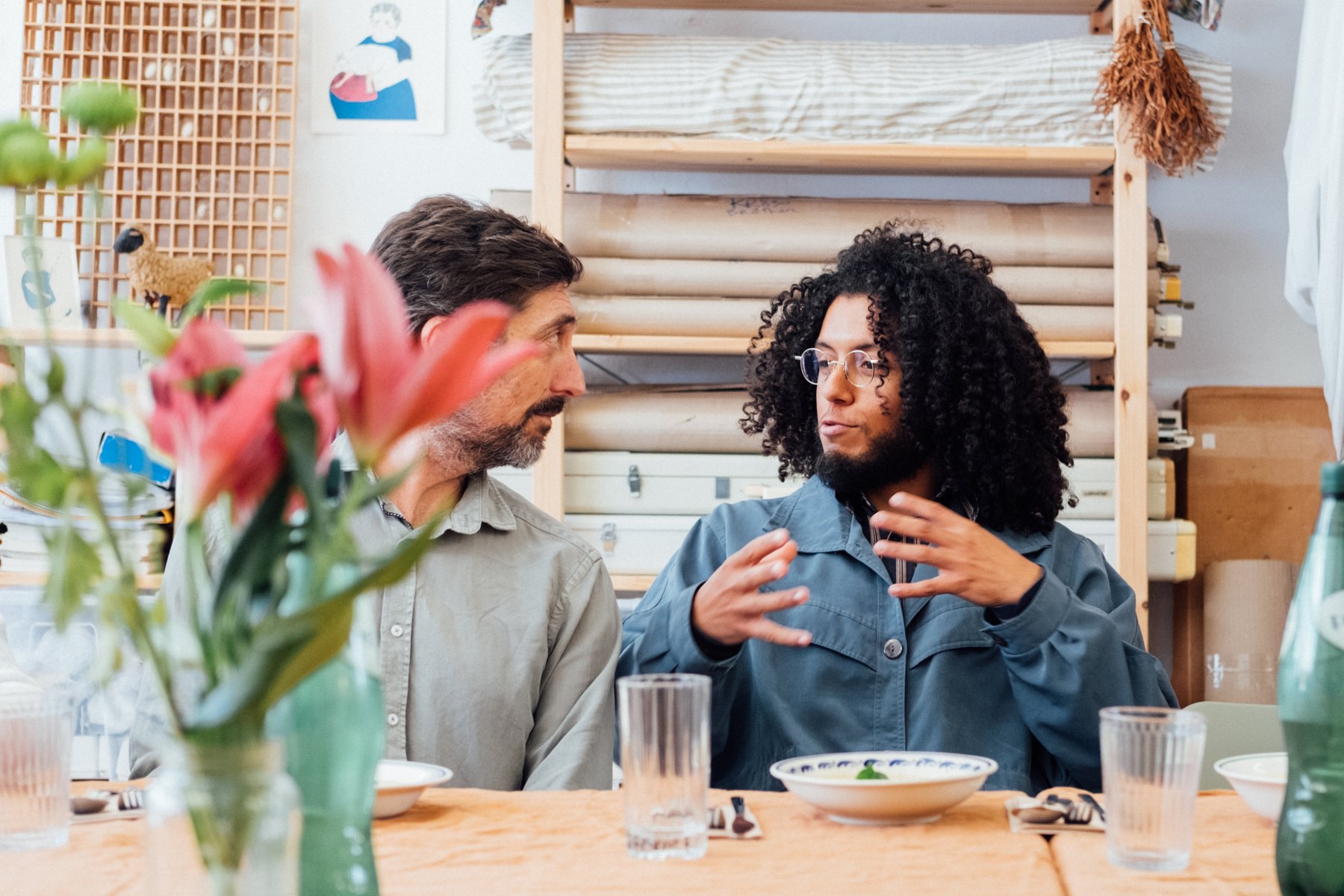
On the panel were Snider Rodrigues and Monika Błoch of Venn Canteen, Pedro Rocha of O Quinto Elemento, and nutritionist Ana Helena Pinto of Nutrition for Happiness, moderated by Sofia Ferraz of Tasteology and Porto Coffee Week. Then the table was cleared and Venn Canteen served a vegan lunch.
Food is an act of culture
Opening the afternoon, Miguel Barbot explained why food belongs at Saber Fazer. The studio works with natural fibres and wool, a product of extensive farming that is too often treated as waste, so agroecology is part of everything it does. In his words, food is an act of culture, and a creative one too.
Sofia Ferraz set the tone: this was not a conversation about recipes or nutrition, but about politics, identity and survival, and about where food really comes from, from the soil to the hands that handle it.
Five thousand calories
Pedro Rocha started with a striking figure: the world produces around 5,000 calories per person per day, more than twice what we need, and hunger still exists. We eat too much, waste a great deal, and grow food for animals that we then eat. Food is about a third of the sustainability picture, and the biggest driver of biodiversity loss and soil degradation.
Ana Helena Pinto reminded the room that sustainability has to hold socially, environmentally and economically at once. Her work on food identity, including with the Terra Maronesa association, champions Portugal's regional varieties, and asks cooks to start from what local producers have in season rather than from a recipe.
EATING IS A POLITICAL ACT
Knowing your suppliers by name
At Venn Canteen, a 28-cover restaurant with a tasting menu, Monika and Snider know around 90% of their suppliers by name. Their project eat.bitz maps the biodiversity on each farm so diners can see where each ingredient comes from. They dropped chocolate over deforestation and labour concerns, and say trust in a producer can matter more than an expensive certificate.
Pedro's favourite answer in the food sector is "it depends". He offered three questions instead: who produces it, how they produce it, and what happens along the distribution chain. Underneath them sits a bigger one: is food a commodity, or a common good like water?
The real cost of cheap food
Is sustainable food an elite product? Pedro pointed out that people will spend €600 on a phone but call €2 a kilo for potatoes a scandal. Snider explained that cheap food is often cheap because its real costs are subsidised or pushed elsewhere, and that a mostly plant-based basket of pulses, vegetables and nuts already costs less.
As Monika put it, the price is not what it seems, because we pay the difference later in medication, healthcare and our own bodies.
Schools and the public plate
More than half of a child's food is eaten at school, Pedro said, and in Porto only a few large companies can bid for school catering. He would move to self-managed canteens linked to their area. Ana Helena, who advises municipalities, argued the key is knowing how to buy: some councils now specify whole, unpeeled potatoes and fresh fish twice a week, and get them.
Snider noted that 10 to 15% of public budgets in the EU goes on food, so changing procurement criteria could shift whole systems. Ana Helena would add a national campaign for Portugal's food identity, and Monika called on restaurants to organise together. The palate, everyone agreed, can be educated, in children and adults alike.
Then we ate
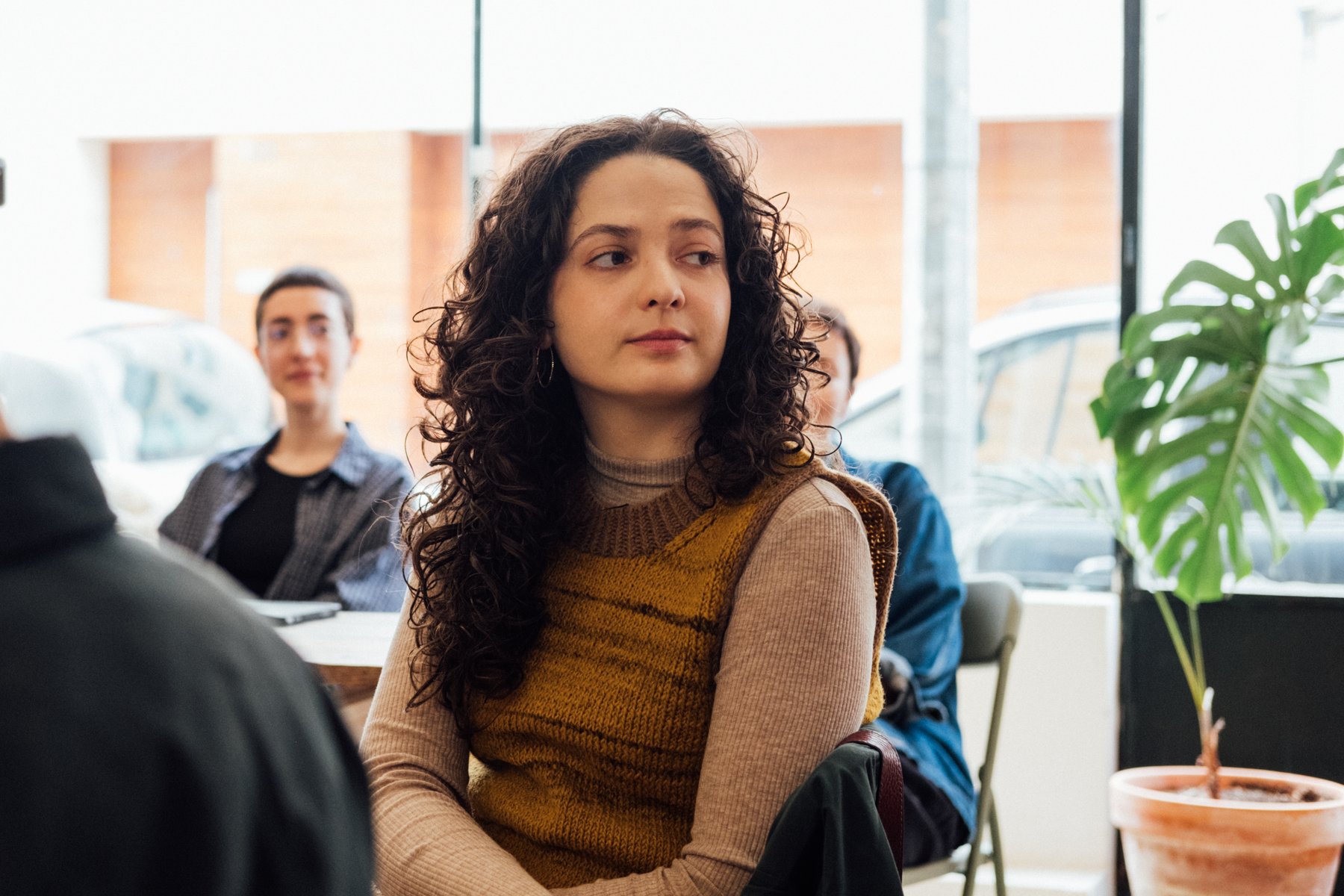
After the talk, the audience joined in, from the montado, Portugal's 2,000-year-old cork oak landscape, to forgotten regional apple varieties and how to value the work of a beehive beyond its honey.
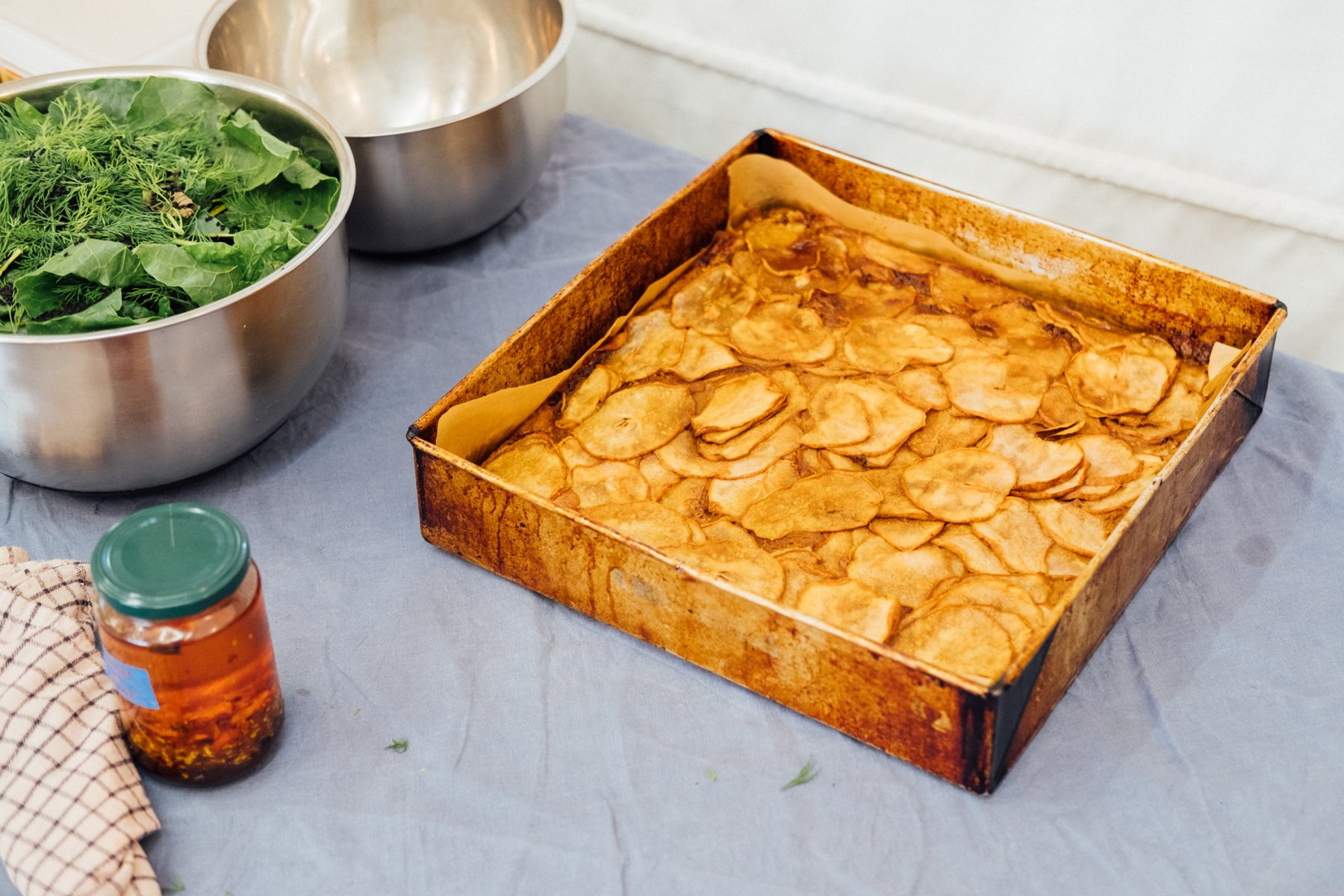
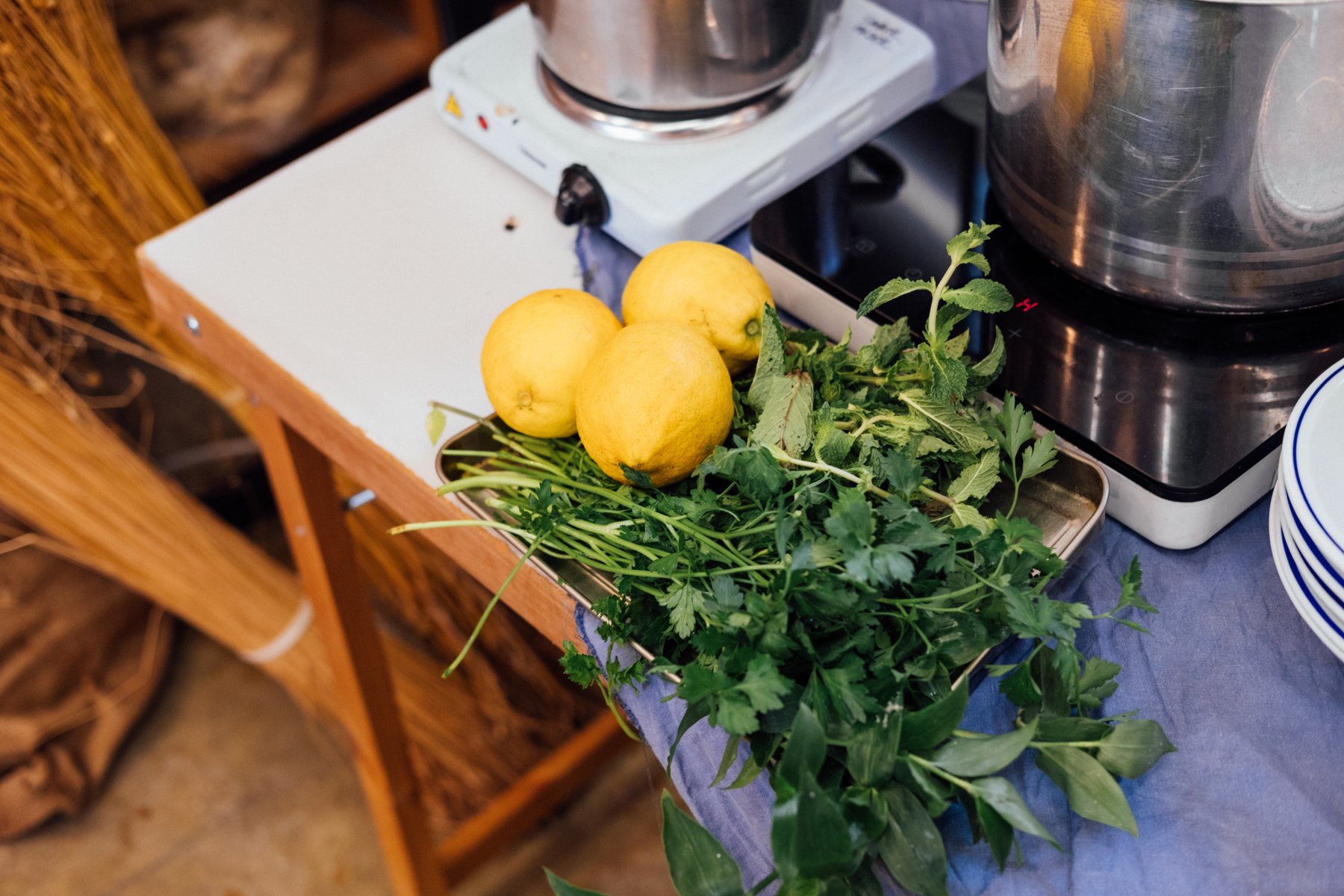
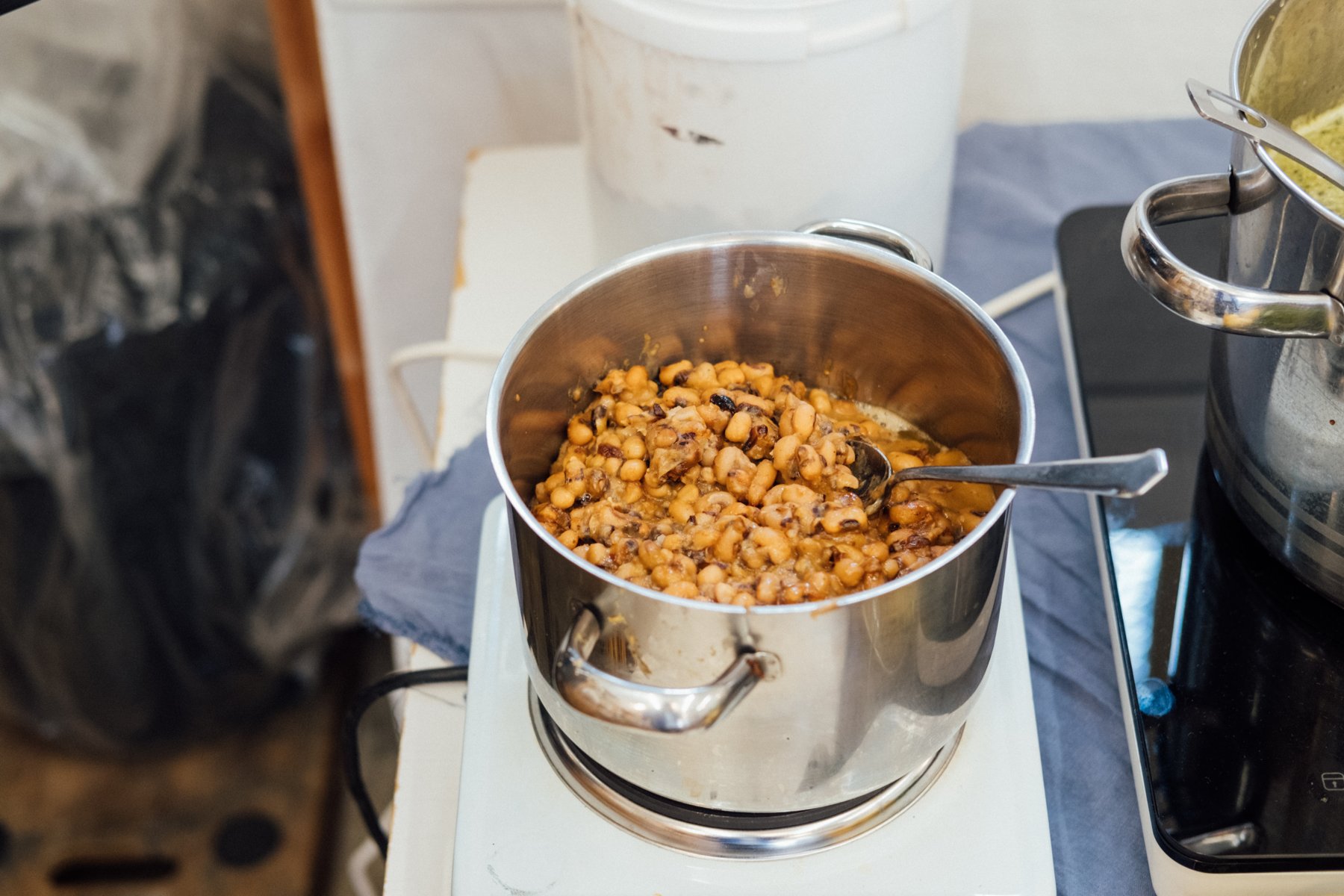
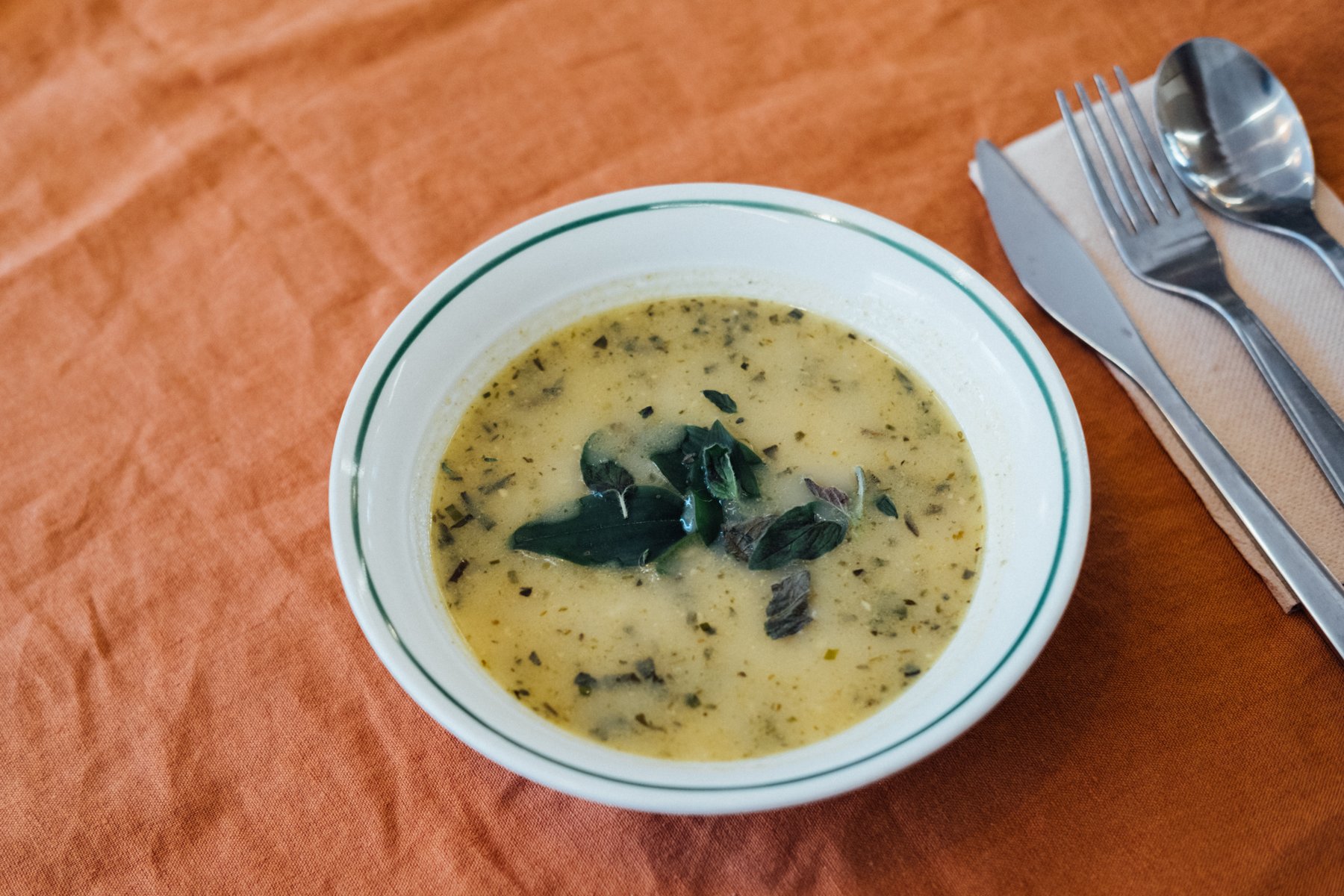
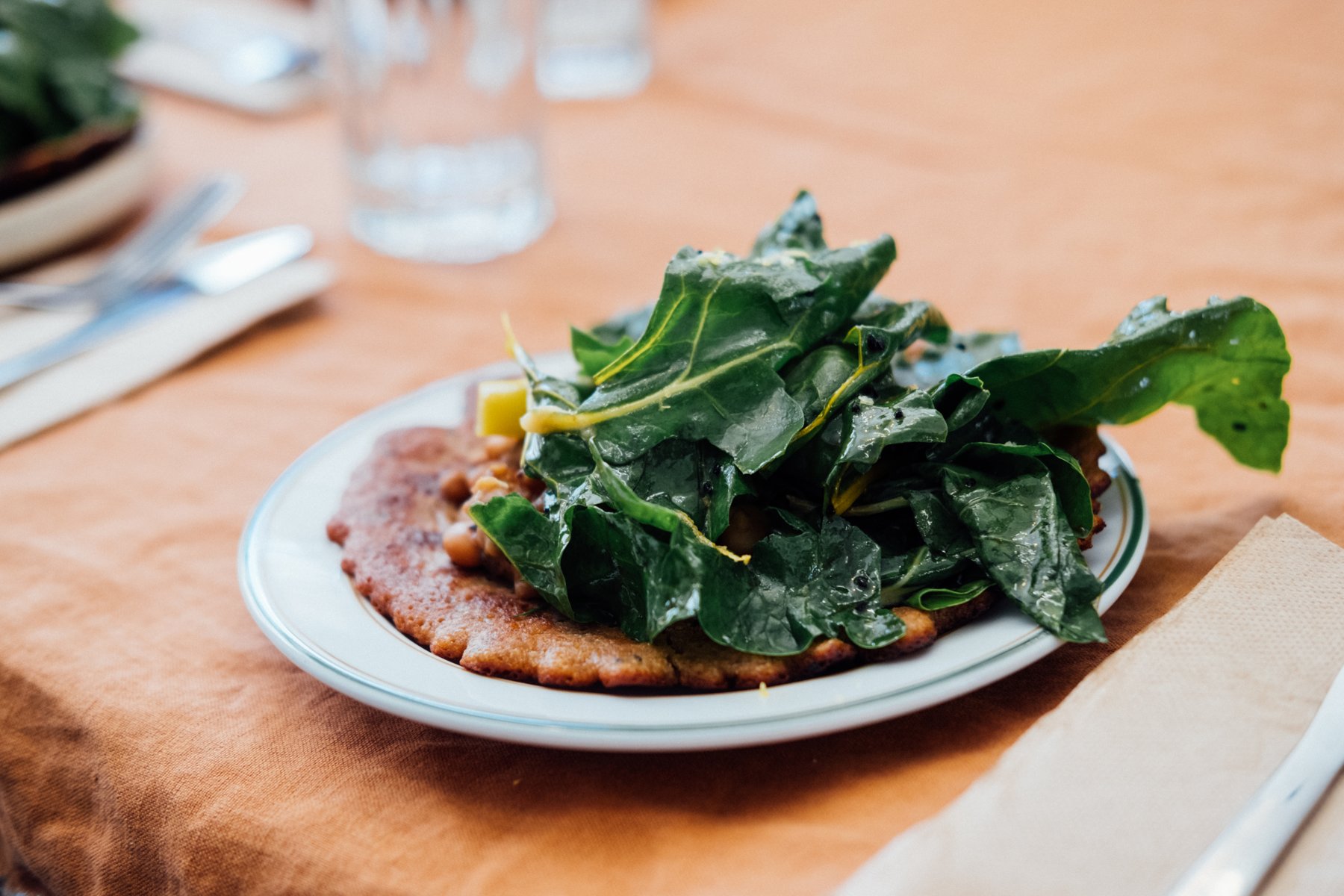
Then Venn Canteen served a vegan lunch that did the conversation justice.
Watch the full roundtable on YouTube →
Photos: Barbot Bernardo
TY-CO (communities in conversation) · ABR – Alternative Brains Rule · Co-funded by the European Union
Funded by the European Union. Views and opinions expressed are however, those of the author(s) only and do not necessarily reflect those of the European Union or the European Education and Culture Executive Agency (EACEA). Neither the European Union nor EACEA can be held responsible for them.