25 / 10 / 2026
The Good News Gazette (From the Future)
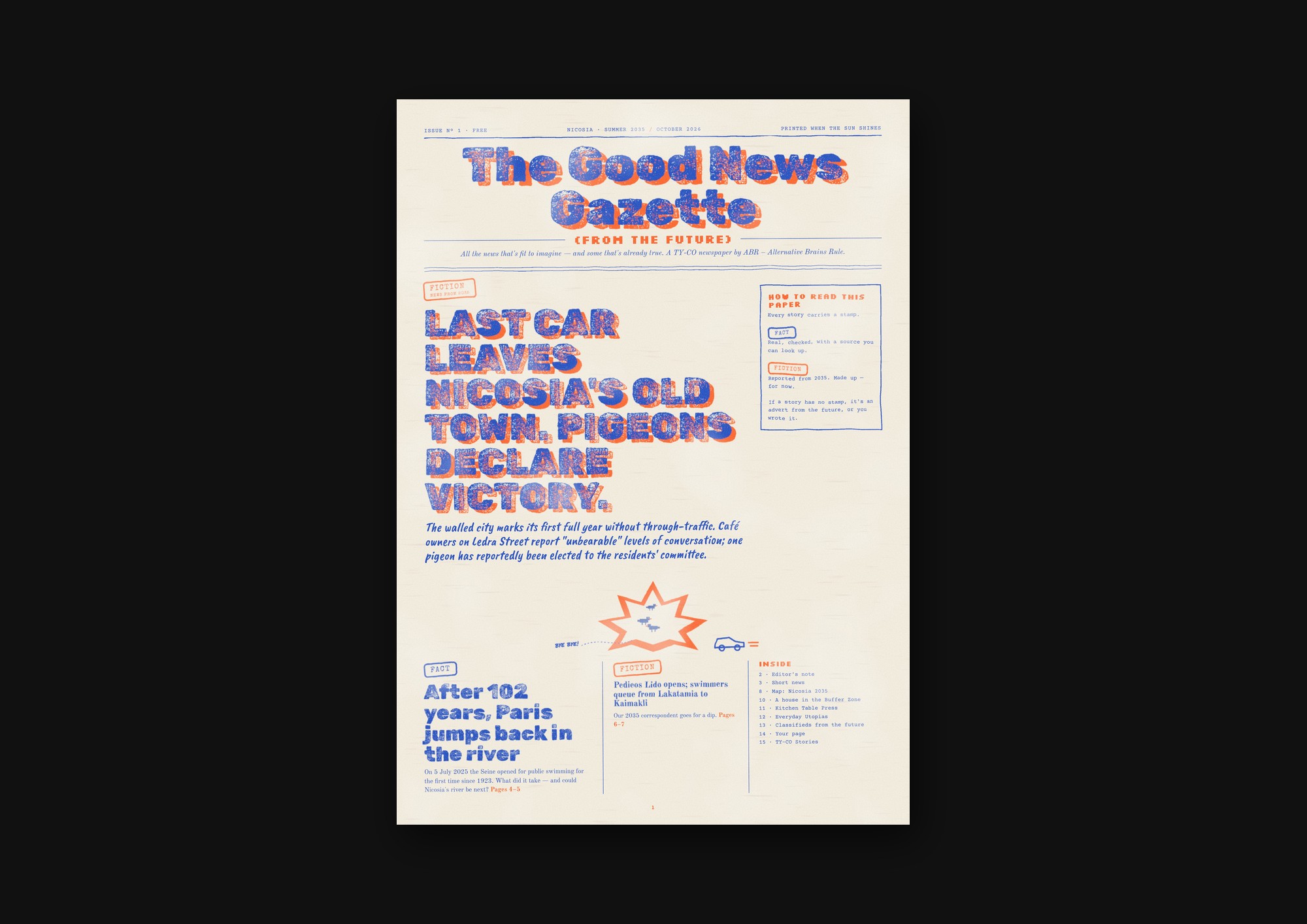
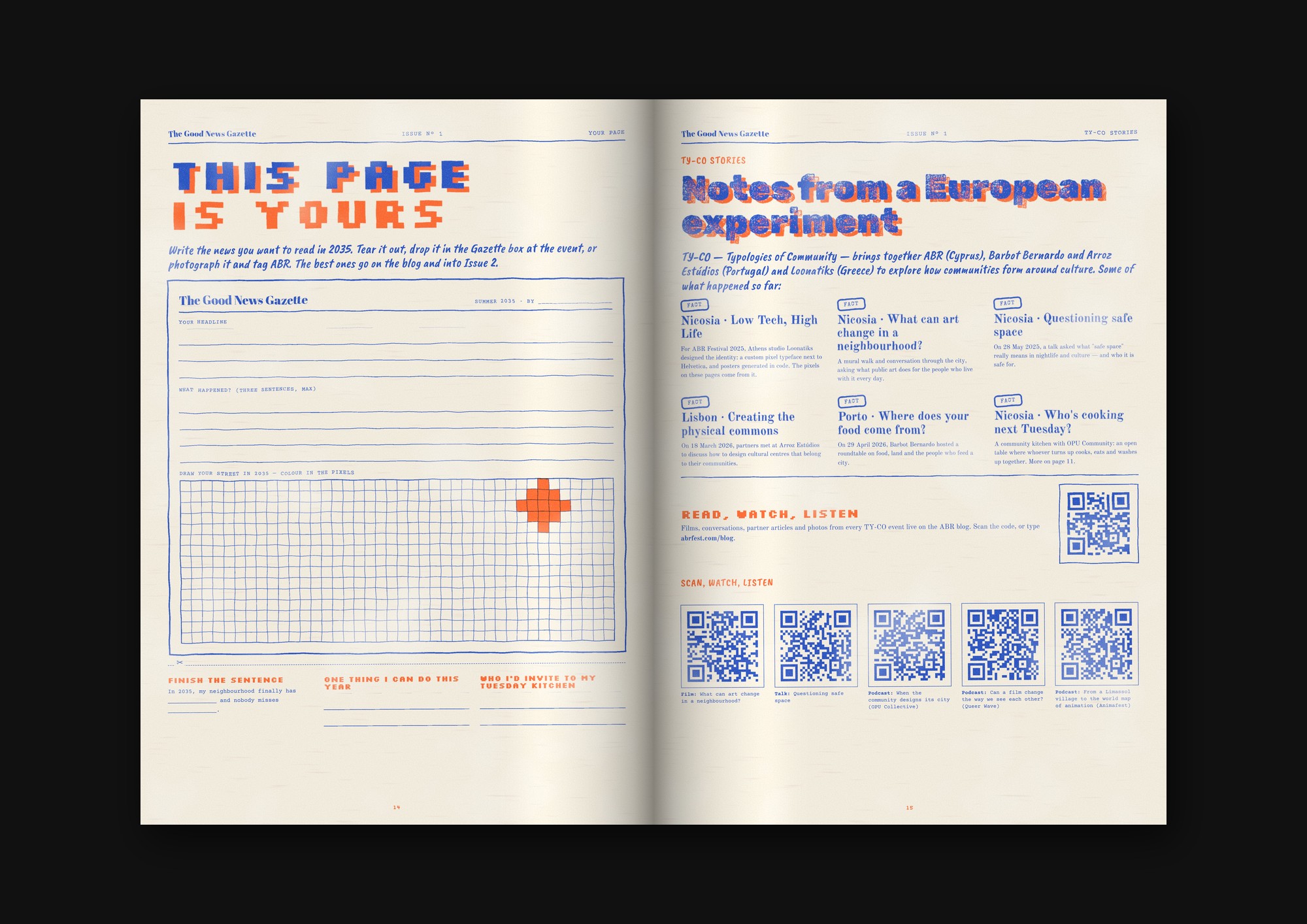
A free newspaper from a future we would actually want to live in, made by ABR as part of TY-CO.
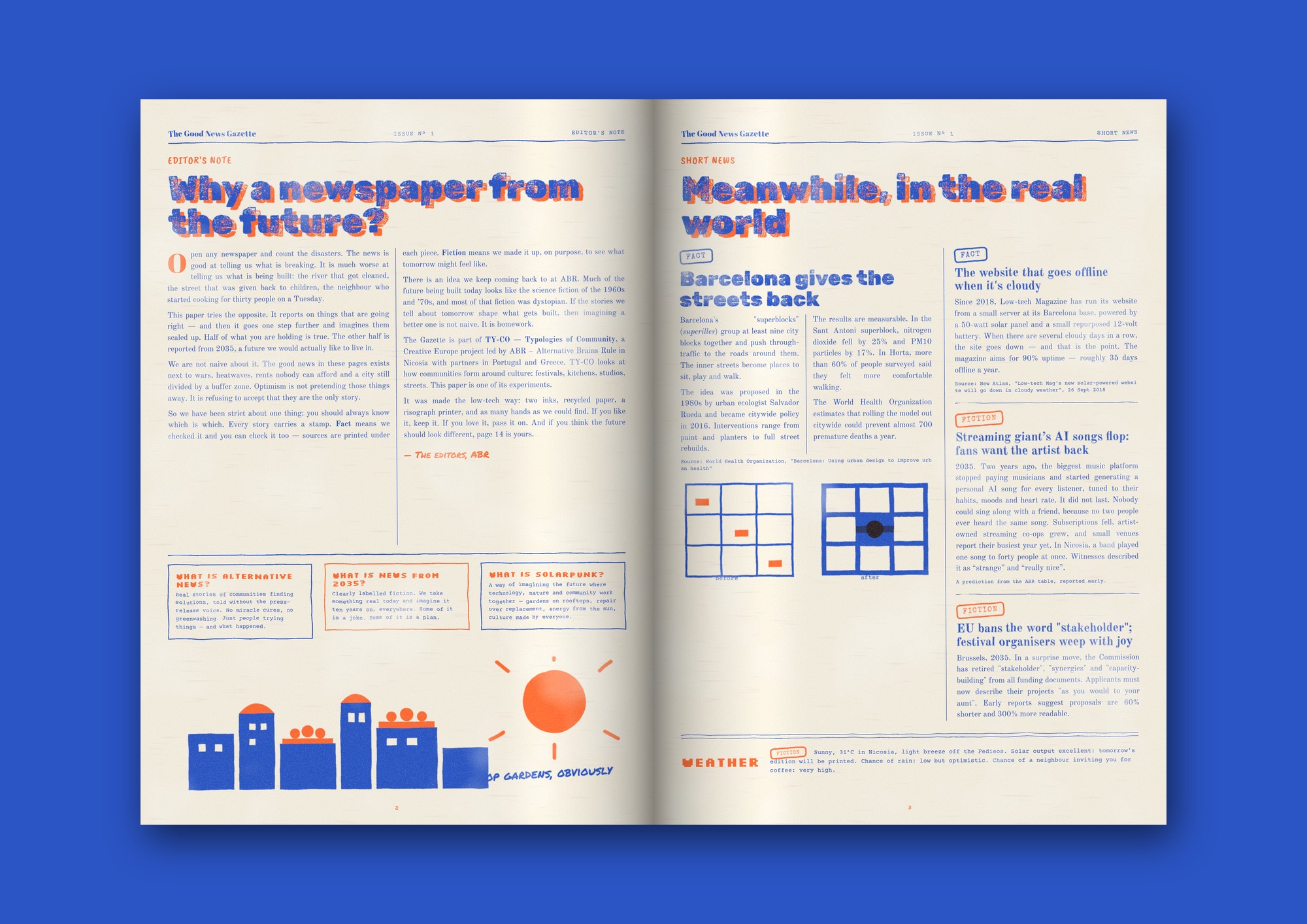
Open any newspaper and count the disasters. The news is good at telling us what is breaking, and much worse at telling us what is being built: the river that got cleaned, the street that was given back to children, the neighbour who started cooking for thirty people on a Tuesday. The Good News Gazette tries the opposite. It reports on things that are going right, and then imagines them scaled up, reported from 2035.
Every story carries a stamp. FACT means we checked it and you can check it too: sources are printed under each piece. FICTION means we made it up, on purpose, to see what tomorrow might feel like. Optimism is not pretending wars, heatwaves or unaffordable rents away. It is refusing to accept that they are the only story.
Why imagine at all?
There is an idea we keep coming back to at ABR. Much of the future being built today looks like the science fiction of the 1960s and ’70s, and most of that fiction was dystopian. The films and novels of the past became the blueprints of the present.
If the stories we tell about tomorrow shape what gets built, then imagining a better one is not naive. It is homework. The Gazette is our small contribution: a place to practise picturing futures worth building, and to notice the ones already being built around us.
What’s inside
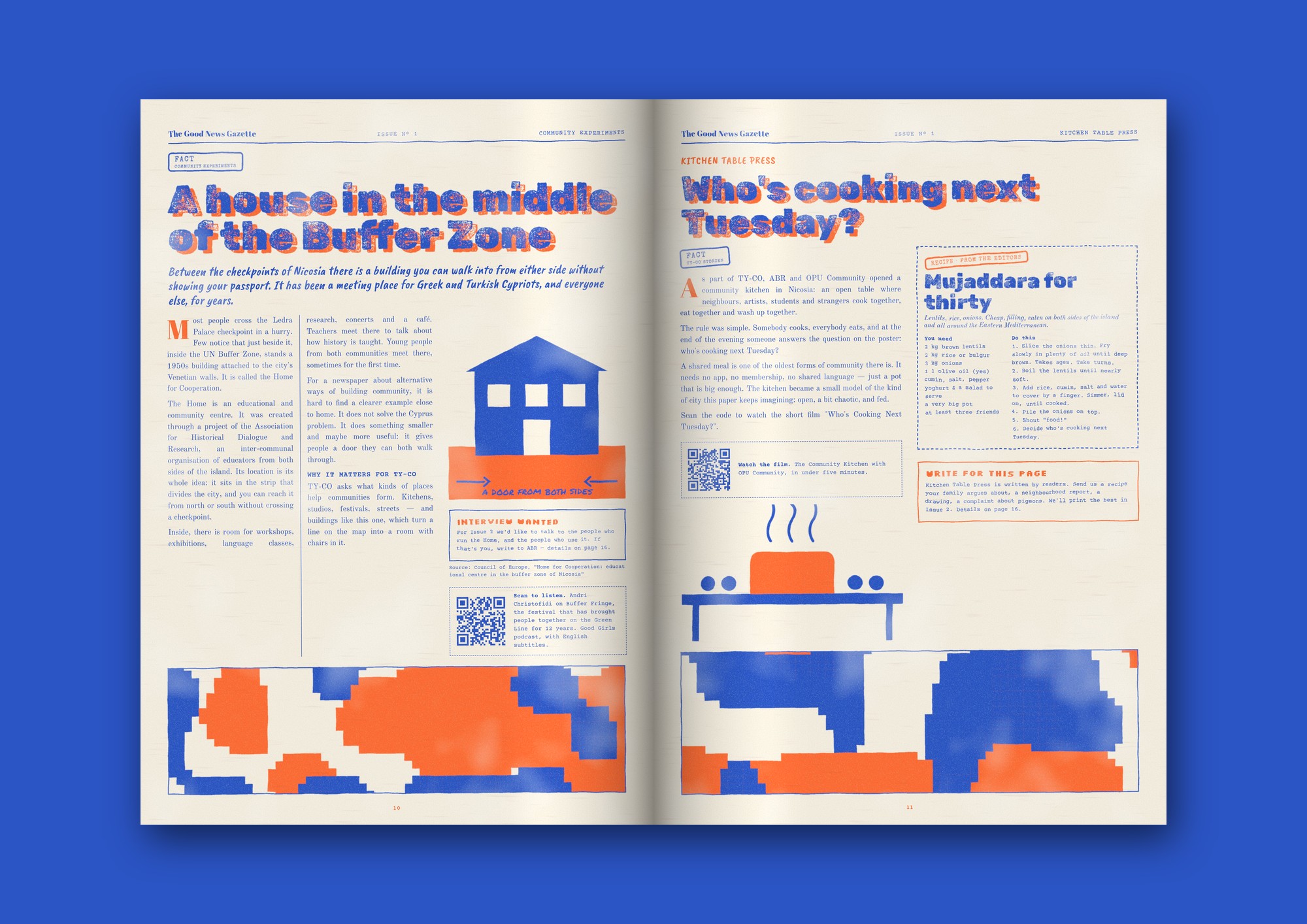
Real stories from Paris, Barcelona and Nicosia: a river reopened to swimmers after a century, streets given back to people, a house in the middle of the Buffer Zone, and Europe’s new right to repair.
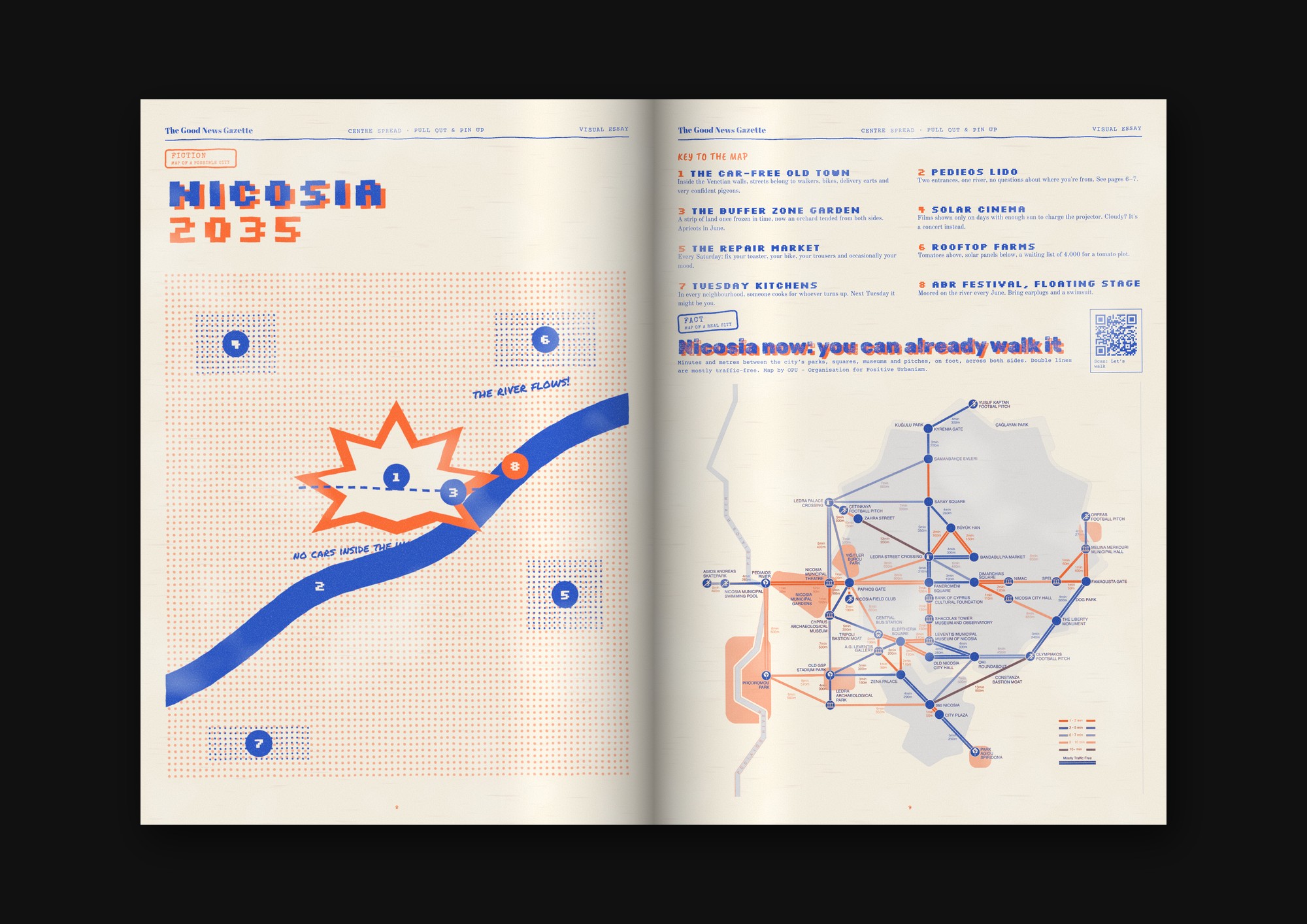
News from 2035: a car-free old town, the Pedieos Lido, a streaming giant whose AI songs flop because fans want the artist back, a pull-out map of Nicosia 2035 and classifieds from the future, plus a page where readers write the headline they want to read. QR codes throughout lead to our films, talks and podcasts.
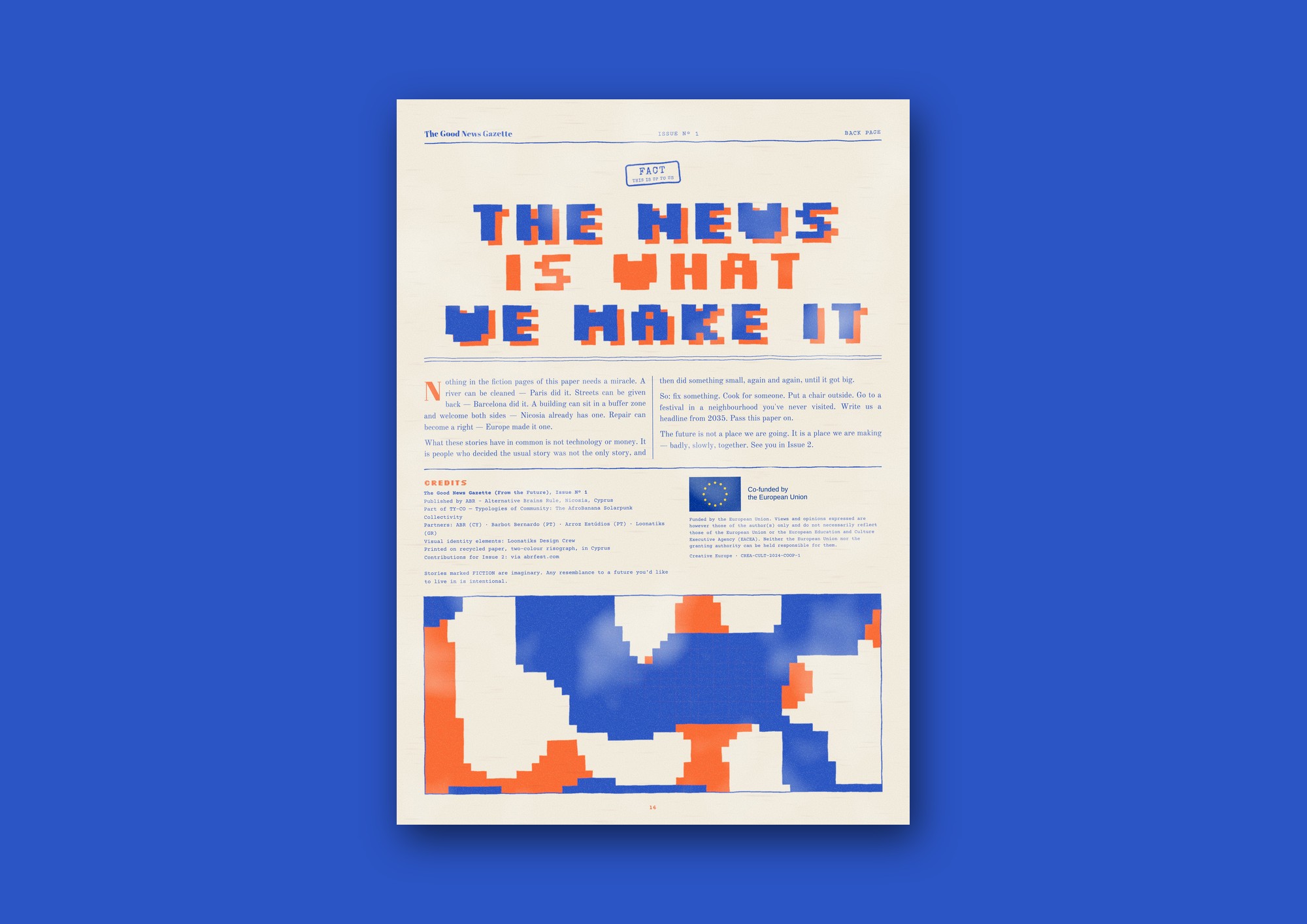
THE NEWS IS WHAT WE MAKE IT
TY-CO (communities in conversation) · ABR – Alternative Brains Rule · Co-funded by the European Union
Funded by the European Union. Views and opinions expressed are however those of the author(s) only and do not necessarily reflect those of the European Union or the European Education and Culture Executive Agency (EACEA). Neither the European Union nor the granting authority can be held responsible for them.